Spring love letter to begin - excerpt
Signs of Spring begin very early in this part of the world. Technically it is still winter according to the calendar, but plants and animals have their own schedule of elongated emergence into the season. I find myself highly attuned in my watching and listening during this time of year; my antennae are up, sensing for small yet significant changes in Spring’s arriving. The delicate pink tips on huckleberry’s bare green winter stems. The first magenta coloured salmonberry blossom, the sounds of Swainson’s thrush returning. Rhubarb poking up above the soil. The smell of cottonwood buds in the air. The medicine that stinging nettle brings. The changing quality of sunlight - less watery, more round – and holding some heat. The ocean turning from dark blue-black to lighter hues, full of plankton and herring spawn that activate a wild, cacophony of life each Spring. And on and on, we reawaken.
In visiting ?iyuls (Cliff Gilker Park) the other day, I noticed - as I always do - what’s happening with a specific Douglas Fir growing in a small grove of older trees. This fir, for the 20+ years that I’ve known them, has had an open wound on their trunk that seeps sap. I often wonder why this wound has stayed open so long rather than healing over. Most days, in all seasons, I put my nose up close and take a deep inhale to see what I can smell. In early- to mid-Spring when the sap starts to flow again the smell is strong and gorgeous, and I often get so close that my nose gets sticky with it. Flowing tree life brought to the surface, made visible, shining and sparkling in the Spring light.
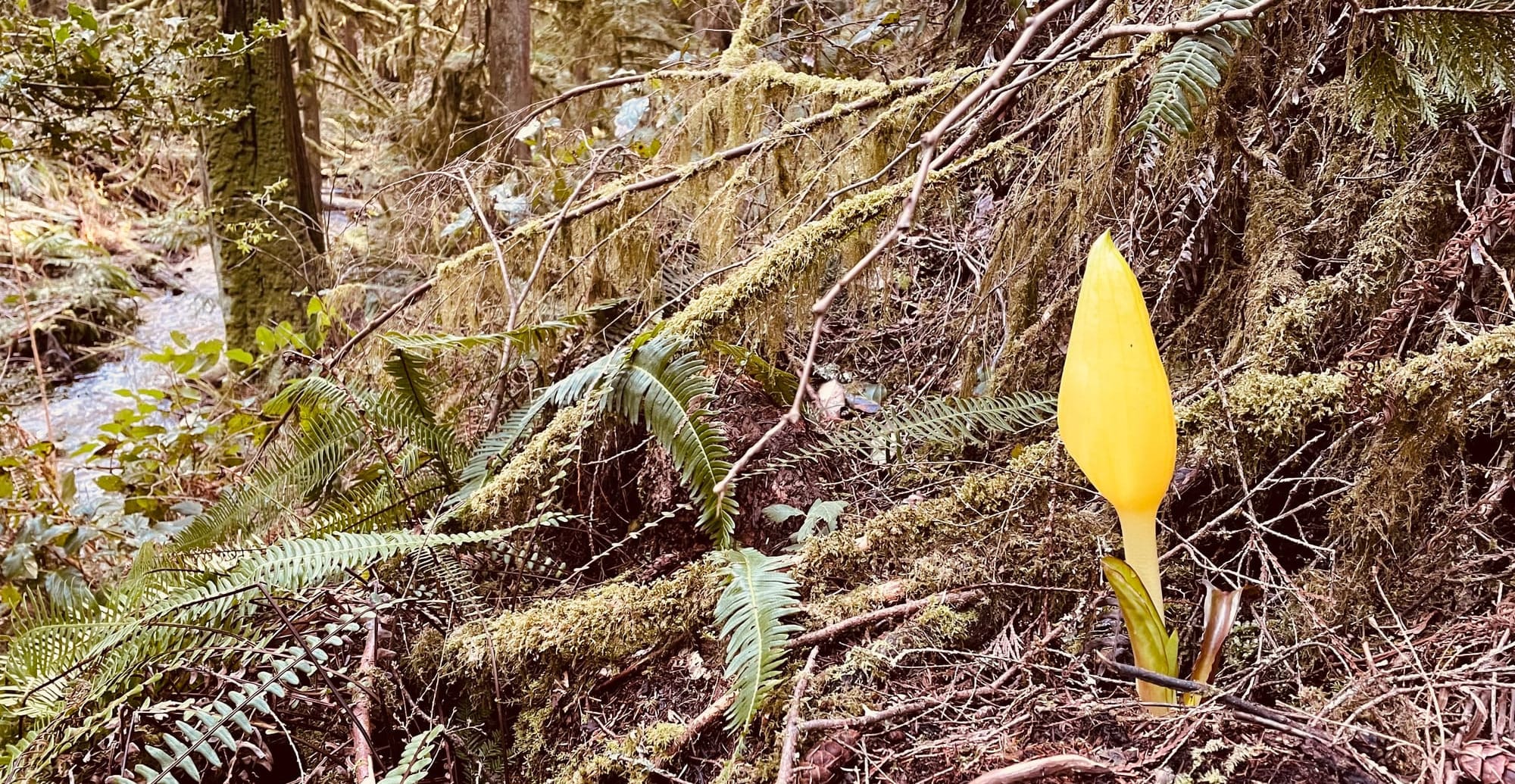
Spring is a highly embodied season and can be a big lift, energy-wise. We’re coming out of winter hibernation, living from our stored energy. Then we emerge, eyes blinking, stretching, our bodies stiff – into the brightness. Spring reminds us that we are solar powered creatures too, more indirectly than our plant kin, yet sensing how sunlight awakens us after the long dark. I love scenting for skunk cabbage and their dramatic, colourful arising from the mud. This year, and every year, skunk cabbage reminds me that even when you’ve been hiding out – invisible - in the cold, quiet, dark for many months, it is always possible to emerge again from the muck looking and smelling fabulous.
Cole, Lindsay (forthcoming, 2027). Transforming the Public Sector from Within. University of Toronto Press.
Member discussion